There have been significant transformations in hair restoration in recent years. While earlier, it was all about temporary fixes and hair maintenance techniques, things have moved much ahead into a different domain where emphasis is laid on rejuvenation and not just hair loss control.
In 2026, people are becoming more aware of treatments that work beyond the surface. They want procedures that are science-backed, minimally invasive, and capable of improving hair growth naturally over time. This is exactly why stem cell transplant for hair has started gaining attention across the world of regenerative medicine.
The term itself sounds highly technical, and understandably, many people are curious about what it actually means. Is it a hair transplant? Is it similar to P-R-P? Can it regrow hair permanently?
The truth is, stem cell-based hair treatments are opening up a completely new conversation around how hair loss can be approached in the future.
Let’s understand everything about stem cell treatment for hair in a simple and practical way.
Why Stem Cell Transplant for Hair is Being Talked About So Much in 2026
There was a time when most people waited until baldness became severe before seeking treatment. Today, the mindset is very different.
People are now looking for treatments that can:
- Support healthier hair growth early
- Improve scalp health naturally
- Delay progression of thinning
- Reduce dependence on temporary fixes
This growing demand for regenerative solutions is one of the biggest reasons stem cell therapy has become such a widely discussed topic in hair restoration.
Unlike conventional treatments that mainly focus on controlling hair fall, stem cell-based procedures aim to improve the scalp environment itself.
Understanding Stem Cell Hair Treatment in Simple Terms
Stem cells are unique cells in the body that have regenerative properties. They help repair and renew damaged tissues.
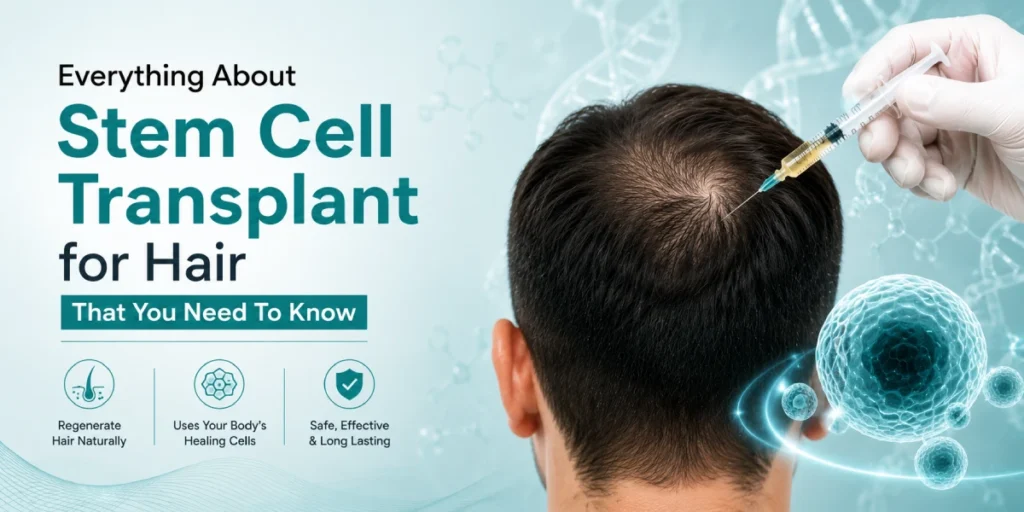
When used for hair restoration, these regenerative cells are introduced into the scalp to stimulate weak or inactive hair follicles.
The idea behind the treatment is simple:
Help the scalp create a healthier environment for natural hair growth.
Rather than artificially creating results, stem cell therapy focuses on encouraging the body’s own regenerative process.
How Stem Cell Transplant for Hair Actually Works
The exact technique can vary depending on the approach being used, but generally, the process involves:
Collecting Regenerative Cells
These cells may be derived from specific tissues within the body.
Processing the Sample
The collected material is processed carefully to isolate regenerative components.
Introducing Them Into the Scalp
The prepared solution is then injected or applied into areas affected by thinning or hair loss.
Once introduced, these regenerative cells help support:
- Follicle stimulation
- Better blood circulation
- Improved scalp health
- Stronger hair growth cycles
This is why stem cell treatment is often considered a part of modern regenerative hair medicine.
Stem Cell Hair Treatment vs Hair Transplant: Understanding the Difference
One of the most common misconceptions is that stem cell therapy and hair transplant are the same thing.
They are actually very different procedures.
Hair Transplant
- Moves hair follicles from one area to another
- Best for advanced baldness
- Provides visible coverage in bald areas
Stem Cell Hair Treatment
- Focuses on stimulating existing follicles
- Suitable for early to moderate thinning
- Aims to improve natural hair function
In simple words:
A hair transplant relocates hair.
Stem cell therapy works on improving the scalp’s regenerative ability.
Both treatments have their own role depending on the stage of hair loss.
Who Can Benefit Most From Stem Cell Hair Treatment?
Stem cell therapy is generally considered more suitable for people who still have active or weakened hair follicles.
It may help individuals experiencing:
- Early-stage thinning
- Gradual reduction in density
- Diffuse hair fall
- Weak hair growth
- Stress or lifestyle-related hair loss
At Dr Kumar’s Hair Transplant Clinic in Kondapur, Hyderabad, regenerative therapies are often explored for patients who want to address hair concerns before they progress to more advanced stages.
Why Many Patients Prefer Regenerative Hair Treatments Today
Modern patients are not just looking for quick fixes anymore. They are looking for treatments that feel:
- Less aggressive
- More natural
- Scientifically advanced
- Sustainable in the long run
Stem cell-based procedures fit naturally into this shift because they focus on strengthening the scalp environment rather than simply masking the issue.
Another important reason for their popularity is the minimal downtime involved.
What to Expect During a Stem Cell Hair Procedure?
One of the reassuring aspects of the procedure is that it is usually minimally invasive.
The session typically involves:
- Scalp preparation
- Application or injection of regenerative components
- Post-treatment scalp care guidance
The procedure is generally done under local anesthesia and does not require hospitalization.
Most sessions are completed within a few hours.
Recovery After Stem Cell Hair Treatment: Is There Any Downtime?
Recovery after stem cell hair treatment is usually simple compared to surgical procedures.
Some people may experience:
- Mild redness
- Temporary sensitivity
- Slight soreness for a day or two
Most patients are able to return to regular activities very quickly.
This convenience is one of the reasons why regenerative procedures are becoming increasingly attractive to working professionals and younger patients.
When Do Results Start Appearing?
Hair growth always takes time, regardless of the treatment.
With stem cell therapy, patients may gradually notice:
- Reduced hair fall within a few weeks
- Better hair texture over 1–2 months
- Improved density over 3–6 months
The results usually appear progressively because the treatment works by improving the scalp’s natural biological processes.
Can Stem Cell Hair Treatment Replace Hair Transplant Completely?
Not necessarily.
This is where realistic expectations become important.
Stem cell therapy works best when follicles are still present and capable of responding.
For people with:
- Advanced baldness
- Completely inactive follicles
- Large bald patches
A hair transplant may still be the more suitable option.
In many cases, regenerative treatments are used alongside hair transplant procedures to improve scalp condition and support healthier growth.
Under the guidance of Dr. Ashok Kumar, treatment planning at Dr Kumar’s Hair Transplant Clinic focuses on understanding what stage of hair loss the patient is in before recommending any procedure.
Why Stem Cell Therapy is Seen as the Future of Hair Restoration
The future of hair restoration is moving toward treatments that focus on regeneration instead of temporary management.
Stem cell therapy reflects that shift perfectly.
It represents a newer generation of hair treatments that aim to:
- Improve follicle health
- Encourage natural growth
- Support long-term scalp wellness
While research and advancements continue to evolve, there is no doubt that regenerative medicine is becoming a major part of modern hair restoration conversations.
A More Thoughtful Way to Approach Hair Loss
Hair loss treatment today is no longer about choosing the “latest trend.” It’s about understanding which solution actually fits your scalp condition, stage of hair loss, and long-term goals.
For some people, regenerative therapies like stem cell treatment may help strengthen and preserve hair early on. For others, a hair transplant may still be the better option.
The key lies in proper evaluation and realistic guidance.
Clinics like Dr Kumar’s Hair Transplant Clinic in Kondapur, Hyderabad are increasingly focusing on this personalized approach, helping patients understand not just what’s advanced, but what’s actually appropriate for them.
Because ultimately, successful hair restoration is not just about regrowing hair. It’s about restoring confidence in a way that feels natural, sustainable, and right for the individual.