
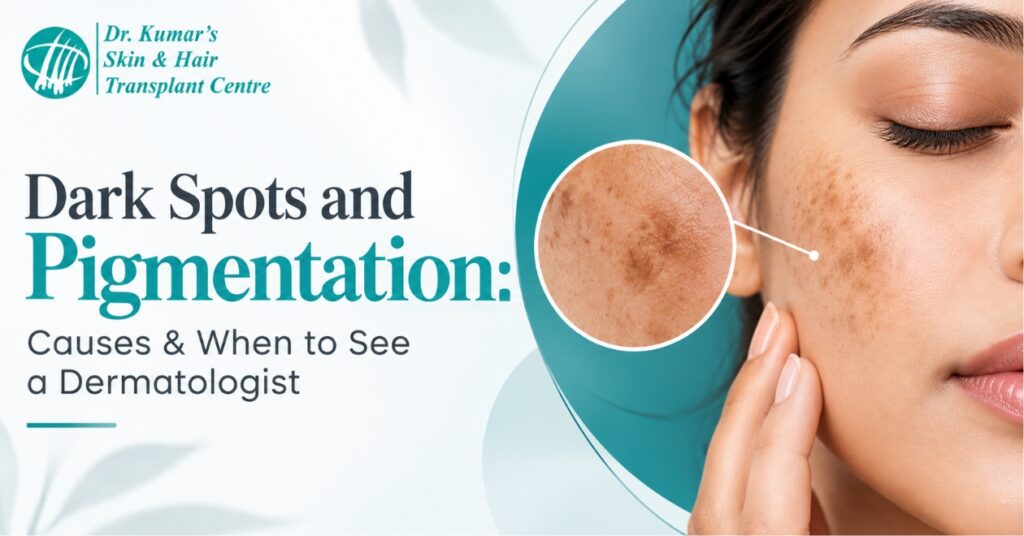
Dark spots and pigmentation are common skin concerns that can affect people of all ages. They may appear as small brown spots, patches, or uneven areas of skin tone, particularly on the face. While pigmentation is often harmless, persistent or changing discoloration may sometimes need professional evaluation.
Understanding what causes dark spots and pigmentation can help you recognize the triggers and know when it is time to consult a dermatologist.
At Dr. Kumar Skin and Hair Transplant Clinic, Kondapur, Hyderabad, skin concerns are carefully evaluated to understand their underlying causes and provide personalized guidance.
What is Skin Pigmentation?
Pigmentation refers to the colour of your skin, which is mainly determined by a natural pigment called melanin. When the skin produces excess melanin or distributes it unevenly, darker patches or spots can develop.
Pigmentation may appear gradually due to repeated sun exposure or develop after acne, inflammation or hormonal changes.
Common Causes of Dark Spots and Pigmentation
- Sun Exposure: Regular exposure to UV rays can increase melanin production and lead to tanning, dark spots and uneven skin tone. Without proper sun protection, existing pigmentation may become more noticeable.
- Acne and Inflammation: Dark marks often remain after pimples or other skin inflammation have healed. These are commonly known as post-inflammatory hyperpigmentation and may take time to fade.
- Hormonal Changes: Hormonal fluctuations can contribute to conditions such as melasma. It commonly appears as brown or greyish patches on areas of the face such as the cheeks, forehead, nose, and upper lip.
- Skin Irritation: Harsh skincare products, excessive exfoliation or unsuitable cosmetics can irritate the skin. This irritation may trigger increased pigmentation, especially in people prone to dark marks.
- Genetics: Some people are naturally more likely to develop freckles, pigmentation or uneven skin tone due to their genetic makeup.
- Medications and Medical Conditions: Certain medications and underlying medical conditions can sometimes contribute to changes in skin pigmentation. New or unexplained pigmentation should therefore be evaluated rather than self-treated.
For proper assessment and personalized guidance, Dr. Kumar Skin and Hair Transplant Clinic is a best skin clinic in Kondapur, Hyderabad, helping patients understand the possible causes behind their pigmentation concerns.
Types of Dark Spots You May Notice
Pigmentation can appear in different forms, including:
- Melasma: Brown or greyish patches, commonly on the face
- Post-acne marks: Dark spots left after acne heals
- Sunspots: Flat spots associated with prolonged sun exposure
- Freckles: Small spots influenced by genetics and sunlight
- Uneven skin tone: Areas that appear darker or lighter than the surrounding skin
Although these concerns may look similar, their causes can be different.
When Should You See a Dermatologist?
Not every dark spot requires medical attention. However, consider consulting a dermatologist if:
- Dark spots continue to increase
- Pigmentation becomes darker or more noticeable
- New patches appear without an obvious reason
- Marks remain for a long time
- Pigmentation is associated with irritation or inflammation
- You are unsure what is causing the discoloration
- Home skincare is not improving the concern
A professional evaluation can help identify the type and possible cause of pigmentation.
Why Diagnosis Matters
Pigmentation is not one single skin condition. Using unsuitable products for the wrong type of pigmentation may cause irritation and make discoloration more noticeable.
During an evaluation, a dermatologist may consider your skin type, pigmentation pattern, sun exposure, skincare routine, acne history, and other relevant factors.
At Dr. Kumar Skin and Hair Transplant Clinic, you can consult a top dermatologist in Kondapur, Hyderabad for proper evaluation and personalized guidance.
How Can You Protect Your Skin?
Simple daily habits can help reduce common pigmentation triggers:
- Use sunscreen regularly
- Avoid excessive sun exposure
- Do not pick or squeeze acne
- Choose gentle skincare products
- Avoid excessive scrubbing
- Follow a consistent skincare routine
- Seek professional advice for persistent concerns
These habits can support overall skin health and help prevent pigmentation from becoming more noticeable.
Take the First Step Toward Healthier-Looking Skin
Dark spots and pigmentation can have many different causes, and understanding the reason behind them is more important than simply trying to lighten them.
If you are noticing persistent pigmentation, unexplained dark patches, or recurring marks, a dermatologist can help you understand what is happening with your skin and guide you appropriately.
Book a consultation at Dr. Kumar Skin and Hair Transplant Clinic, Kondapur, Hyderabad and take the first step toward understanding your skin better.