
Sexually transmitted infections (STIs) can affect anyone, and they do not always cause noticeable symptoms. Many people may have an infection without realizing it and can unknowingly pass it to a partner.
Understanding how STIs spread can help you take the right precautions, recognize possible risks, and know when to seek medical advice.
At Dr. Kumar’s Skin & Hair Transplant Center, Dermatologist in Kondapur, Hyderabad, patients can receive professional guidance for concerns related to sexually transmitted infections and other skin conditions.
How are STIs Spread?
STIs are mainly spread through sexual contact with an infected person. This can include vaginal, anal, or oral sex.
Some infections can also spread through direct skin-to-skin contact with an infected area, even when there is no penetration.
The way an STI spread depends on the type of infection. This is why understanding the specific infection is important.
Common Ways STIs are Transmitted
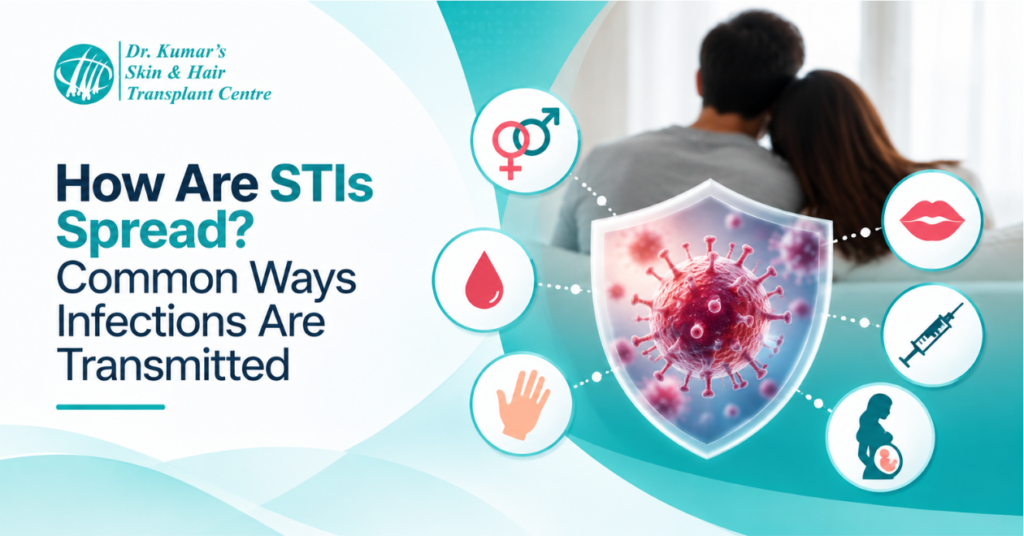
STIs can spread in several ways, including:
- Vaginal, anal or oral sexual contact
- Direct genital skin-to-skin contact
- Contact with infected sores or lesions
- Exposure to infected blood
- Sharing needles or injection equipment
- From mother to baby during pregnancy or childbirth in some cases
Since each STI can spread differently, proper medical evaluation is important. For STI and skin-related concerns, consult Dr. Kumar Skin and Hair Transplant Clinic, a best dermatology clinic in Kondapur, Hyderabad.
Can STIs Spread Through Unprotected Sex?
Yes. Having sex without a condom or other barrier protection can increase the risk of several STIs.
Condoms can reduce the risk of many infections when used correctly and consistently. However, they may not provide complete protection against infections that can spread through skin that is not covered.
If you have had unprotected sex and are worried about an STI, getting medical advice and appropriate testing can provide clarity.
Can STIs Spread Through Oral Sex?
Yes. Some STIs can spread through oral sex.
Infections such as herpes, gonorrhea, syphilis, and HPV can potentially be transmitted through oral sexual contact.
Some people may not develop obvious symptoms, so it is possible to have an infection without knowing it.
Can STIs Spread Through Skin-to-Skin Contact?
Yes. Certain STIs can spread through close skin-to-skin sexual contact.
For example, HPV and genital herpes can spread through contact with infected skin or sores. Penetration is not always necessary for transmission.
This is one reason why symptoms such as genital sores, blisters, or unusual growths should not be ignored.
Can STIs Spread Through Kissing?
Most STIs are not commonly transmitted through casual kissing.
However, infections such as oral herpes can spread through direct contact with infected areas around the mouth.
The risk depends on the specific infection and whether an active infection is present.
Can STIs Spread Through Sharing Needles?
Yes. Certain infections that are transmitted through blood, such as HIV and hepatitis B, can spread through contaminated needles or injection equipment.
Never share needles or injection equipment with another person.
Can an STI Spread Without Symptoms?
Yes.
This is an important reason why STI testing can be useful after a possible exposure.
Some infections may not cause noticeable symptoms, particularly in the early stages. A person may feel completely healthy but still have an infection and potentially pass it to a partner.
Symptoms alone cannot confirm whether someone has an STI.
What are the Common Symptoms of STIs?
Although some STIs have no symptoms, possible warning signs can include:
- Unusual discharge from the penis or vagina
- Burning while urinating
- Genital itching or irritation
- Genital sores or blisters
- Unusual bumps or warts
- Pain during sexual activity
- Testicular pain or swelling
- Unexplained rashes
These symptoms do not always mean that you have an STI. Other skin, urinary, or genital conditions can cause similar problems.
A medical evaluation can help identify the actual cause.
How Can You Reduce the Risk of STIs?
You can take several steps to reduce your risk:
- Use condoms correctly and consistently
- Discuss sexual health and testing with partners
- Get tested after a possible exposure
- Avoid sexual contact if you or your partner has unexplained genital sores
- Do not share needles or injection equipment
- Stay up to date with recommended vaccinations such as HPV and hepatitis B
- Follow your doctor’s treatment advice if diagnosed with an STI
No prevention method completely eliminates the risk of every STI, but taking appropriate precautions can reduce the chance of infection.
When Should You See a Doctor?
Consider seeing a doctor if you notice:
- Genital sores or blisters
- Unusual discharge
- Burning while urinating
- Persistent genital itching
- New genital bumps or warts
- Testicular pain or swelling
- Symptoms after unprotected sexual contact
- A sexual partner has been diagnosed with an STI
If you are worried about a recent sexual exposure, consider getting tested even without symptoms. At Dr. Kumar Skin and Hair Transplant Clinic, you can consult a best skin specialist in Kondapur, Hyderabad for proper evaluation and care.
Why Early STI Evaluation Matters
Ignoring symptoms or waiting for them to disappear may delay the diagnosis of an infection.
Early evaluation can help identify the cause of symptoms and, when an STI is present, allow appropriate treatment to begin. It can also help reduce the risk of passing an infection to a sexual partner.
Avoid taking antibiotics or other medicines without medical advice, as the correct treatment depends on the specific infection.
Take Your Sexual Health Seriously
STIs can sometimes be difficult to recognize because they may cause mild symptoms or no symptoms at all.
Knowing how STIs are transmitted can help you understand your risk and make better decisions about prevention and testing.
If you notice unusual genital symptoms or are concerned about a possible STI exposure, don’t feel embarrassed to seek medical advice.
At Dr. Kumar Skin and Hair Transplant Clinic, Kondapur, Hyderabad, you can consult a dermatologist for confidential evaluation and guidance regarding STI-related skin and genital concerns.
Book a consultation today and take the right step toward better sexual health.