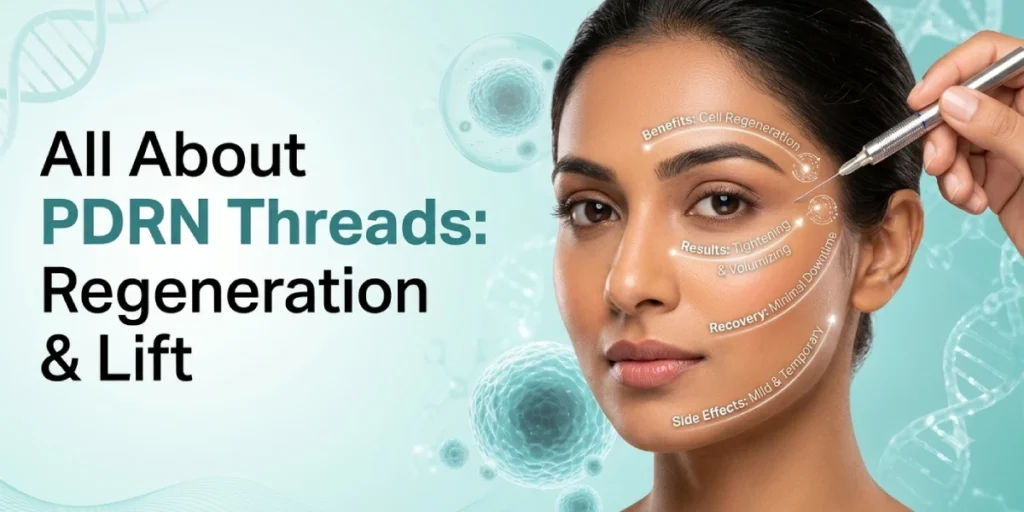
PDRN (polydeoxyribonucleotide) threads are a minimally invasive aesthetic treatment that supports skin rejuvenation and improves overall skin quality. Fine threads are placed within the skin by combining the skin-repairing properties with PDRN benefits. The treatment may be considered by people experiencing early signs of ageing, fine lines, reduced skin elasticity, or mild skin laxity.
PDRN threads do not involve large incisions or extensive downtime, unlike traditional surgical lifting procedures. The treatment encourages gradual improvements in the treated skin. Results and recovery may differ depending on the treatment area and individual skin characteristics.
What Are PDRN Threads?
PDRN threads are fine threads associated with PDRN-based skin rejuvenation. When these threads are placed within the targeted area, they provide a controlled stimulus to the surrounding tissue, and the PDRN ingredient supports the skin’s natural repair and regeneration processes. Unlike injectable PDRN treatments, where the substance is delivered through multiple injections, PDRN threads involve placing fine threads into targeted areas of the skin.
The treatment may help improve skin quality, texture, hydration, and elasticity over time. Depending on the treatment approach, threads may also be used in areas where mild laxity or early loss of firmness is present.
PDRN threads are not a replacement for surgical facelifting; they are considered for individuals looking for gradual skin rejuvenation and improvement in mild ageing concerns.
How Do PDRN Threads Work?
PDRN threads work as a combination of thread placement and the regenerative process associated with PDRN.
- Fine threads are carefully placed into the targeted areas of the skin.
- The threads create a controlled stimulus that may encourage the skin’s natural healing response.
- The PDRN component is intended to support skin repair and regeneration.
- Over time, the skin’s natural repair processes and collagen production may help improve firmness and texture.
- Results develop gradually, with some changes potentially appearing soon after treatment.
- Improvements related to collagen formation and skin regeneration may continue over several weeks or months.
The combination of the treatment may contribute to changes in:
- Skin texture
- Firmness
- Elasticity
- Fine lines
- Overall skin quality
This is why PDRN thread results are generally progressive rather than instantaneous.
PDRN Threads vs Traditional Thread Treatments
All thread treatments are not the same; they may have different purposes:
| PDRN Thread Approach | Traditional Thread Treatment |
| Incorporates PDRN into a thread-based treatment approach | Primarily relies on the properties and placement of the thread itself |
| Focus on skin rejuvenation and quality, depending on the product | May focus more strongly on lifting, contouring, or tissue support |
| Intended effects may develop gradually through tissue response | Results depend on the thread material, placement, and treatment technique |
| Specific effects depend on the PDRN thread product used | Different thread materials can produce different outcomes |
What Are the Potential Benefits of PDRN Threads?
PDRN threads are used for skin rejuvenation and provide several advantages:
1. Improved Skin Texture: The treatment supports skin-repair processes and may help create smoother and more refined skin.
2. Support for Skin Firmness: The treatment may be recommended when the skin has started to lose some of its firmness.
3. Softer Appearance of Fine Lines: Fine lines associated with early skin ageing may appear less noticeable as skin quality improves.
4. Improved Overall Skin Quality: Specific people seek treatment to improve their dull and tired skin.
5. Gradual Rejuvenation: The goal of the treatment is to make gradual improvement in the quality and appearance of the skin.
What Skin Concerns Can PDRN Threads Help Improve?
PDRN threads are considered for individuals experiencing early or mild skin-ageing concerns:
- Fine lines and wrinkles
- Mild skin laxity
- Reduced skin firmness
- Uneven skin texture
- Dull or tired-looking skin
- Reduced elasticity
- Early signs of facial ageing
PDRN Threads: Results and Timeline
PDRN thread treatment is a gradual process to improve the skin. The timeline may vary depending on the treatment area.
| Time After Treatment | What Patients May Notice |
| Immediately after treatment | Mild redness, swelling, or tenderness may be present around the treated areas |
| First few days | Initial swelling and sensitivity begin to subside |
| Following weeks | Gradual improvements in skin texture and appearance |
| 1-3 months | Collagen-related changes and improvements in skin quality |
| Beyond 3 months | Results may continue to develop depending on the individual’s response |
How Long Do PDRN Thread Results Last?
The duration of results varies between individuals and depends on several factors such as the type of threads used, treatment area, age, lifestyle, etc.
PDRN threads provide gradual improvements rather than immediate correction of ageing concerns. The treated concerns, such as skin laxity, may return with the natural ageing process.
PDRN Thread Recovery and Aftercare
PDRN threads generally involve less downtime than surgical facial procedures. The doctor may recommend:
- Avoiding unnecessary touching or rubbing of the treated area
- Avoiding strenuous exercise for the period recommended by your doctor
- Limiting excessive heat, steam, and direct sun exposure initially
- Avoiding facial massage unless specifically permitted
- Using only recommended skincare products during the initial recovery period
- Following all prescribed medication and aftercare instructions
- Attending follow-up appointments as advised
Possible Side Effects of PDRN Threads
PDRN thread treatment is a safe procedure, but it may involve some temporary side effects, including:
- Redness
- Swelling
- Bruising
- Tenderness or mild discomfort
- Temporary sensitivity
- Minor unevenness during the initial healing period
These complications are short-lived and subside with the doctor’s guided care.
Conclusion
PDRN threads offer a minimally invasive approach to improving skin quality and addressing early signs of ageing, but the treatment is not an instant facelift procedure. It offers gradual improvements as the skin responds to the treatment.
Choosing an experienced professional such as Dr. Kumar can help support a comfortable recovery and realistic treatment outcome.
Frequently Asked Questions (FAQs)
Can PDRN threads be used in the under-eye area?
PDRN threads may be considered for certain areas around the eyes, but the under-eye area has delicate skin and requires careful assessment.
Can PDRN threads improve acne scars?
PDRN threads help improve overall skin texture in selected patients, but they are not a universal treatment for acne scars.
Can PDRN threads replace dermal fillers?
No, as dermal fillers are used to restore volume of facial contours, whereas PDRN thread treatments are focused on skin rejuvenation.
Can PDRN threads be used for the neck?
Yes, PDRN thread treatments may be considered for selected neck concerns, such as early skin laxity and changes in skin quality.
What happens if a PDRN thread becomes visible under the skin?
A thread may become visible during the initial healing period, which may require a doctor’s assistance to manage the issue.
Can PDRN threads be used on different areas in the same treatment?
Yes, multiple areas may be treated when suitable, but the number and location of threads should be determined as per the patient’s skin condition.
Are PDRN threads painful?
There may be discomfort, but a suitable anaesthesia is used to make the procedure more comfortable. Some tenderness or sensitivity can remain temporarily after treatment.
How should I choose between PDRN threads and other thread treatments?
The choice depends on your requirements as to what you want to improve rather than simply choosing a type of thread. Skin quality, laxity, facial structure, age-related changes, and the desired degree of lifting or rejuvenation all influence the treatment choice. A consultation allows the doctor to assess these factors before recommending an approach.